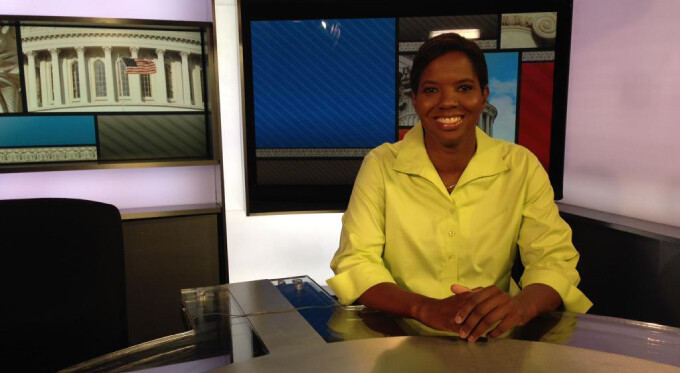
Briana Scurry: The Goalkeeper Who Broke Barriers and Redefined Women’s Strength

As a leading diversity & inclusion speaker, Briana Scurry has spent her career smashing barriers on and off the pitch. From her unforgettable penalty-save in the 1999 Women’s World Cup to becoming one of the first African-American and openly gay athletes at the highest level of women’s football, she has redefined what representation looks like.
Her work now a resonates particularly powerfully in the UK context, where sport and corporate culture alike are striving for more meaningful inclusion. Through her speaking engagements, Briana brings insights from her Hall of Fame career and advocates for workplaces and teams to become truly inclusive spaces.
In this exclusive interview with The Female Motivational Speakers Agency, Briana shares how her journey of resilience, leadership and growth offers lessons for British organisations seeking to embed diversity and excellence.
Q: Competing on the world’s biggest sporting stages brings immense pressure. How did you train yourself to stay focused and perform when the stakes were highest?
Briana Scurry: “Well, I will say this, in football in particular, when you’re competing for World Cups or Olympics or Euros or, you know, a qualifying event, you really don’t need much more than to understand what’s at stake. You know, I mean, it’s your entire reason for participating.
“It’s something that you put all your time and your energy and your heart into. And when it’s time, it’s time to go. When it’s time to start and really compete for those things, it’s really easy to get excited about it, it’s really easy to get into it.
“But what also happens sometimes is there’s often teams that really struggle with the higher the stakes, the more difficult it is for them to perform and to compete.
“And for me, it’s always been something where, you know, I have this really, really narrow focus, like laser-like focus, on the task at hand and just really making sure that I only concern myself with what I can control. Because it’s really, really difficult to try to control a teammate or try to control a colleague and what they’re doing.
“If you’re someone and you’re participating on that high-level team or that high-level event, just control what you can control. Remember the fundamentals of what you’re good at and play to your strength. I think it’s important to realise that you might make mistakes.
“I mean, of course, we’ve all seen when we see, you know, Euros on TV or World Cups or Olympic Games, there are mistakes all over the place. There’s always errors made.
“But if you allow yourself to say, “Hey, you know what? I just may not have been my best on that play, or I may not be able to compete at this level on this one thing, but what can I do? What can I control? How can I contribute even if I’m not my best at this particular thing?” And so, I feel like that’s really important to just really narrow the focus for yourself.
“But also, in terms of being a teammate, it’s also really important to communicate with your other teammates and your other employees and workmates because you’re all doing this as a team.
“And maybe you’re struggling on the day and you’re like, “Hey, can you help me out a little bit? I’m having a hard time.” And if you’re that person who’s willing to share how you’re feeling, if you’re willing to be vulnerable and really buy into it, it’s amazing where you can go.”
Q: From your experience, what defines authentic leadership — and how can great teams thrive when everyone plays a different role?
Briana Scurry: “Well, leadership is really, really interesting to me because with my history and playing on the national team, we used to talk about piano players and piano carriers.
“So, especially on a sports team, and also I think in business, there are going to be times when your leadership role is to be out front, to be seen, to be visible, and you’re the one maybe on stage or you’re the one that’s bringing up the group and leading the pack in that particular event or project.
“Your role as a leader is to really be dialled in to encourage and to help other people to come along and do the best that they can and bring their best selves to the group, to the event. But on the other hand, there are also times when you’re leading from the back or you’re carrying the piano, for example. Piano carriers are just as important as the piano player.
“If you’re playing a supporting role, or if you’re normally the leader on a project but this particular project you’re not, always understand and remember that everybody’s role is important. If you’re carrying the piano in that particular instance, you have to do the best you can at what your role is at that time.
“Don’t sulk, don’t bring everybody down, don’t complain. Be positive, be understanding that in this particular instance, your job, your role as a leader, is to support — and it’s just as important.
“I think a lot of people misunderstand what being a leader means. A lot of times the biggest leader on the team for sports is not the person with the captain’s armband on their arm.
“A lot of times it’s somebody who is just really calm, someone who is dependable, somebody who really is supportive and a fantastic teammate. And oftentimes that person is the MVP, not necessarily the person that you would normally expect.”
Q: You’ve spoken openly about overcoming setbacks in your career. What did that period teach you about resilience and personal accountability?
Briana Scurry: “Absolutely. Yeah, I mean, I have several instances, but one of my most difficult ones is the one I usually tend to share.
“Going into the 1999 World Cup, I was the number one goalkeeper on the team and arguably the best goalkeeper in the world at the time. We obviously won that 1999 World Cup in very dramatic fashion, as everybody may recall.
“It was amazing and we really changed the landscape of the sport in our country and around the world — what women could do, what footballers could do overall, and the importance of the game in this community and this country.
“But after that, all of a sudden, I was famous. After that game, everybody knew me, they recognised me, and I was doing all this travelling back and forth from one coast to the other, and I lost track of what was most important at the time. I was really feeding into all the hoopla and the fame. I call it, I was drinking my own Kool-Aid basically.
“I was diving into that, but what I wasn’t doing was being tight and fit on what I was eating. I wasn’t being in the gym. I wasn’t being the Briana Scurry that I needed to be in terms of the footballer. I was soaking in all this fame. Before you knew it, I had gained 25 pounds over the course of several months because I wasn’t focusing on what I needed to focus on. I wasn’t keeping a standard that was really high for what I was doing.
“I ended up losing my position the very next year. In the 2000 Olympics, I didn’t play a single minute in that Olympic Games, just one year later. For me, that was a very humbling experience. I wasn’t just sad, I was angry. The key there was I was angry at outside people — my coach, my teammates — thinking they weren’t standing up for me or going to bat for me.
“It wasn’t until I got a picture in the mail from a reporter who wanted me to sign an autograph that I saw what the truth was. The truth was, I was the one I should be angry at because I was the one that sabotaged my success. I was the one that took my eye off the ball.
“When I saw that picture, I knew what I had to do. I started working out more, basically lived at the gym. I started researching online how to better my nutrition, how to better my strength, what types of activities I could do to make myself a better goalkeeper. I wanted to be the best Briana Scurry I could be, not just better than the second or third-string goalkeeper — the best me I could be.
“When I made that change and decided that I was the one that could control that, I was the one that was going to make the effort to be the best me I could be, then I was actually better than the 1999 Briana.
“In the next couple of years, I really made a change and took responsibility for the fact that I let my teammates down. I let myself down. I let my coach down, and I apologised and took ownership of my role in the situation. I was better in 2004 than I was in 1999. Even though that Olympic Games wasn’t seen as much by people and wasn’t as impactful, I was a better Briana Scurry.
“That was because I overcame the adversity I had caused with the sabotage of my fitness and focus. For me, it’s a really interesting story because I think people like it because I’m really being vulnerable with what happened. A lot of times, people don’t even want to talk about it when it doesn’t go their way. When something goes sideways, oftentimes you really figure out what you’re made of and who you are.
“When you have a lot of success, you don’t look at it under a microscope like you do when you’re having difficulty or failure. So for me, I really got to know who I was in that time when I was struggling. I became a stronger person because of it.”
This exclusive interview with Briana Scurry was conducted by The Diversity & Inclusion Speakers Agency.